
Low-VOC paint: what to know if you have kids, pets, or allergies at home
By Farah Whitfield · Updated 2026-07-19
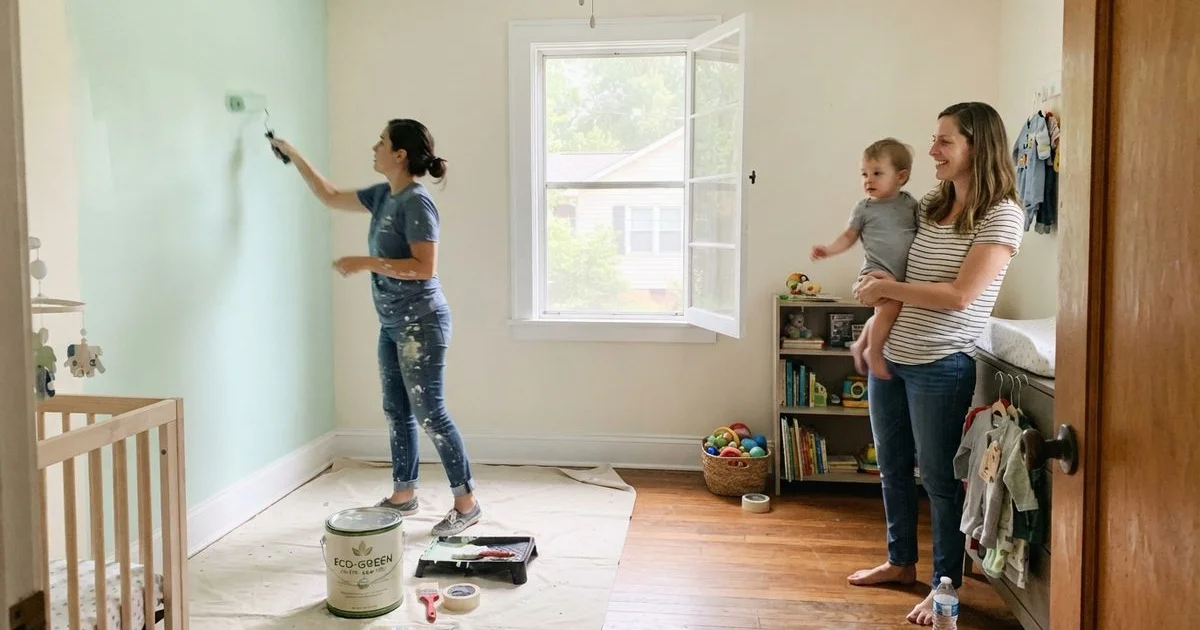
This is general information, not medical advice. If a household member has a diagnosed respiratory condition or chemical sensitivity, talk with their doctor about specific precautions before a painting project.
Fresh paint has a distinct smell for a reason, and for households with young kids, pets, or anyone sensitive to strong odors, that smell is more than a temporary annoyance. Understanding what causes it and how low-VOC options address it helps you make a more informed choice before your next project.
What VOCs actually are
Volatile organic compounds are chemicals in paint that evaporate into the air as the paint dries and cures, and they are the main source of both the smell and, in higher concentrations, potential short-term irritation like headaches or throat irritation for sensitive individuals. Standard paints have historically contained higher VOC levels than the low-VOC and zero-VOC formulations that are now widely available across most major paint brands.
Why it matters more with kids and pets in the home
Young children and pets tend to spend more time close to the floor and in direct contact with walls and trim than adults do, and their smaller body size means any airborne irritant has a proportionally larger effect. Households that cannot easily relocate during a painting project, or that have a member with asthma, allergies, or general sensitivity to strong smells, generally benefit from choosing a low-VOC or zero-VOC line specifically to reduce that exposure during and immediately after the job.
What to expect from low-VOC paint
Low-VOC and zero-VOC paints have improved significantly over the years and now perform comparably to standard paint for coverage and durability in most residential applications. The odor is noticeably milder to begin with, and what smell there is tends to clear faster than a standard, higher-VOC product. This makes low-VOC options a practical choice specifically for occupied homes, not just an environmental preference.
Planning around the timeline, not just the paint
Even with a low-VOC choice, the days immediately after painting carry the most odor and the highest concentration of any remaining compounds in the air, so this is the window that matters most for a sensitive household. If possible, plan for kids and pets to spend extra time in unpainted parts of the home, or with family for a day, during and right after the job rather than assuming the low-VOC label means no adjustment is needed at all.
Reading paint labels beyond the VOC number
VOC content is not the only thing worth checking. Some paints market themselves as low-VOC but still contain other additives, like certain biocides or fragrance compounds, that can bother sensitive individuals even when the VOC count itself is low. If someone in your household has a specific known sensitivity, ask your painter for the full product data sheet rather than relying on marketing language on the can, since that sheet lists ingredients in more detail than the front label typically does.
Comparing the basics
| Factor | Standard paint | Low-VOC / zero-VOC paint |
|---|---|---|
| Odor during application | Stronger, lingers longer | Milder, clears faster |
| Durability | Well established | Comparable in most modern lines |
| Cost | Often slightly lower | Comparable, sometimes a modest premium |
| Best for | Unoccupied spaces, standard needs | Occupied homes, kids, pets, sensitivities |
Questions to ask your painter
Ask specifically which paint lines they use and whether low-VOC or zero-VOC options are available in the sheen you want, since not every color or finish level is available in every VOC tier from every manufacturer. Ask how they plan to ventilate the space during and after painting regardless of which paint you choose, since good airflow speeds up clearing any remaining odor no matter the formulation.
Ventilation still matters either way
Even with a zero-VOC paint, opening windows and running fans during and after application helps clear both odor and any residual moisture from the drying process faster. This is especially worth doing if household members, particularly kids or anyone with respiratory sensitivity, plan to stay in the home during the work.
If you are planning an interior painting project and want to compare low-VOC options with a provider, ask about specific product lines upfront rather than assuming all paint is treated the same. Our methodology covers how we weigh material quality and communication when scoring local painters, and you can start comparing providers from the home page once you know which paint line fits your household.
FAQ
- What are VOCs in paint, exactly?
- Volatile organic compounds are chemicals that evaporate into the air as paint dries and cures, which is what causes the strong smell associated with a fresh paint job. Low-VOC and zero-VOC formulations reduce or eliminate most of these compounds while still providing durable coverage.
- How long do paint fumes linger after a job is finished?
- With standard paint, noticeable odor often fades within a few days, though sensitive individuals may notice lingering smell longer. Low-VOC and zero-VOC paints generally have less odor to begin with and clear faster, which matters most if household members need to stay in the home during the work.
- Is low-VOC paint as durable as standard paint?
- Modern low-VOC and zero-VOC formulations have closed much of the durability gap with standard paint, and many perform comparably for washability and coverage. It is still worth asking your painter about the specific product line's track record for the sheen and use case you need.
- Does low-VOC paint cost more?
- It can, though the price gap has narrowed as more paint lines default to low-VOC formulations. Ask your painter to price both options so you can weigh any cost difference against your household's specific needs.