
How often you actually need to repaint your home's interior
By Farah Whitfield · Updated 2026-07-11
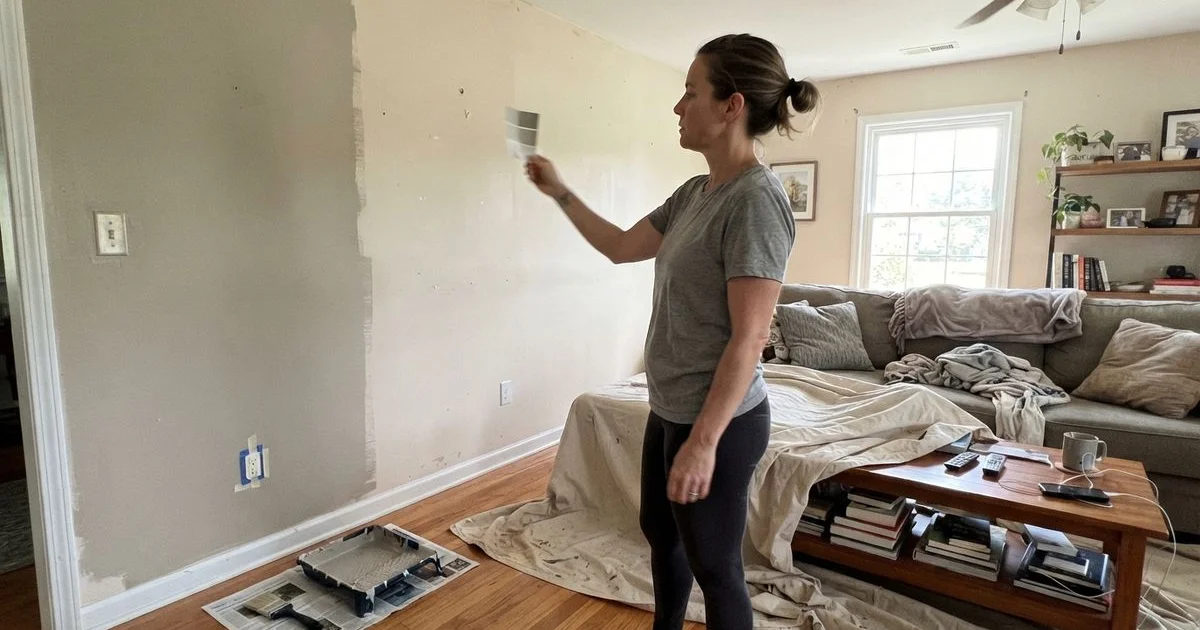
The honest answer to how often a home’s interior needs repainting is that it depends on which room you are asking about. A formal dining room used twice a year and a kitchen with daily cooking, kids, and foot traffic do not age at the same rate, even with identical paint. A room-by-room view is far more useful than a single number for the whole house.
Why some rooms wear out faster
Traffic is the biggest factor. Hallways, kitchens, and entryways see constant contact: hands on walls near light switches, bags and furniture bumping baseboards, and general daily wear that adds up fast. Bedrooms and formal living spaces see a fraction of that contact and can go considerably longer before they show real wear.
Humidity plays a role too. Bathrooms and kitchens deal with steam and moisture that can cause paint to peel, bubble, or develop mildew sooner than a dry, climate-controlled bedroom would. Even with a moisture-resistant paint, these rooms tend to need attention on a shorter cycle.
Kids, pets, and everyday life
Households with young kids or pets often find themselves repainting sooner than the paint’s technical lifespan would suggest, simply because visible marks accumulate: handprints near doorways, scuff marks along hallways, and the general wear that comes with an active household. This is less about paint failure and more about how a room looks day to day, which is a completely valid reason to repaint on your own schedule rather than waiting for paint to technically fail.
Sunlight and fading
Rooms with large south- or west-facing windows fade faster than interior rooms with less direct light, especially with darker or more saturated colors. This is easy to miss because fading happens gradually, but comparing a wall next to a window with a patch behind a piece of furniture or artwork often reveals a surprising difference. If a room gets strong afternoon sun, plan on a shorter repaint interval than a similar room on the shaded side of the house.
How the first paint job affects the next one
The quality of the original job matters as much as any of the factors above. A wall that was properly primed, given two full coats, and painted with a durable line built for its room type will generally outlast a rushed job with thin coverage, even in a high-traffic area. If you are repainting a room that never seemed to look quite right even right after the last job, it may be worth asking your next painter about primer and coat count rather than assuming the paint itself was simply lower quality.
A realistic range by room type
| Room type | Typical repaint interval | Why |
|---|---|---|
| Hallways, kitchens, entryways | 3 to 5 years | High traffic, frequent contact |
| Bathrooms | 3 to 5 years | Humidity and moisture exposure |
| Bedrooms, formal living spaces | 7 to 10 years | Low traffic, less daily wear |
| Ceilings | 10 years or longer | Minimal contact, slow fading |
These ranges assume a reasonably good paint job to start with. A rushed job with thin coats or skipped primer can show wear well ahead of these timelines, regardless of the room’s traffic level.
Signs it is time, regardless of the calendar
Rather than tracking exact years, look for a few practical signs: visible scuffing or fading compared to a protected area like behind furniture, touch-up patches that no longer match the surrounding wall, and a general dinginess that cleaning does not fix. Any of these are a better trigger than a fixed schedule, since actual wear varies so much by household and room.
Planning a repaint around your household’s pace
If you are noticing wear in high-traffic rooms well ahead of the ranges above, a more durable, washable finish on the next repaint can stretch the interval, especially in hallways and kitchens. A good interior painting provider can recommend a sheen and paint line suited to how hard a specific room gets used, rather than treating every wall in the house the same way.
Our methodology explains how we weigh finish durability and customer feedback when scoring local painters, and you can start comparing options from the home page whenever a room in your home starts showing its age.
FAQ
- Is there one standard number of years for repainting a home's interior?
- Not really. A whole-home answer misses how differently each room ages. High-traffic areas and humid rooms wear out faster than formal spaces that see little daily use, so a single number tends to either overestimate or underestimate most rooms.
- Do kids and pets really shorten the repaint cycle that much?
- Yes, noticeably. Households with kids and pets report scuffs, handprints, and nose or paw marks near doors and lower walls well before the paint itself has failed structurally, which often drives an earlier repaint decision than wear alone would require.
- Does higher-quality paint actually last longer?
- Generally yes, especially for washability. Higher-sheen and higher-quality paints resist scuffing and hold up to light cleaning better than basic flat paint, which can extend the time before a room looks like it needs a refresh.
- What is the fastest way to tell if a room needs repainting now?
- Look at the wall in raking light near a window or lamp. Scuffs, fading compared to a hidden area like behind a picture frame, and visible touch-up patches that do not quite match are the clearest signs it is time, regardless of how many years it has been.
Related on this site
- Browse interior painting providers
- What to expect from an interior painting job, from prep to final walkthrough
- Low-VOC paint: what to know if you have kids, pets, or allergies at home
- The best time of year to paint a house exterior in Rock Hill
- Painting your house before you sell it: what's worth doing and what isn't
- All guides →