
Lead paint rules for older homes in South Carolina: what homeowners need to know
By Farah Whitfield · Updated 2026-07-07
This is general information, not legal advice. If you have specific concerns about lead exposure or need to confirm your legal obligations as a homeowner or seller, consult a certified lead inspector or an attorney familiar with South Carolina property law.
Homes built before 1978 are common across Rock Hill, Fort Mill, and the surrounding county, and many of them still have lead-based paint somewhere in their layers, even under several coats of newer paint. Federal rules exist specifically to manage the risk that comes with disturbing that paint during renovation or repainting work, and knowing the basics protects both your household and your wallet.
Why 1978 is the line that matters
The federal government banned residential lead-based paint in 1978, which is why any home built before that year is presumed to contain it unless testing shows otherwise. This does not mean every wall is a hazard. Lead paint that is intact and undisturbed is generally considered low risk. The danger comes from sanding, scraping, or demolition, which can release lead dust into the air and onto surfaces where it settles and lingers.
What the RRP rule actually requires
The EPA’s Renovation, Repair, and Painting rule requires any contractor disturbing lead-based paint on a pre-1978 home to hold RRP certification. That certification means the contractor completed training on lead containment, safe work practices, and proper cleanup, and it must be renewed every three years. This applies to exterior and interior work alike whenever the job involves scraping, sanding, or removing painted surfaces on a covered property.
Before hiring anyone for renovation or repainting work on an older home, ask directly whether they are RRP certified and ask to see proof. A legitimate contractor will have this readily available, since it is a routine part of doing business on older housing stock.
Testing before you renovate
If you are unsure whether a specific surface has lead paint, EPA-recognized test kits are available for a homeowner to check specific areas before a project starts. For larger renovations or if you want a more definitive answer, a certified lead risk assessor can test more broadly. This step is worth the time before a large exterior repaint or interior demolition project, since it determines how the work legally needs to proceed.
Protecting your household during the work
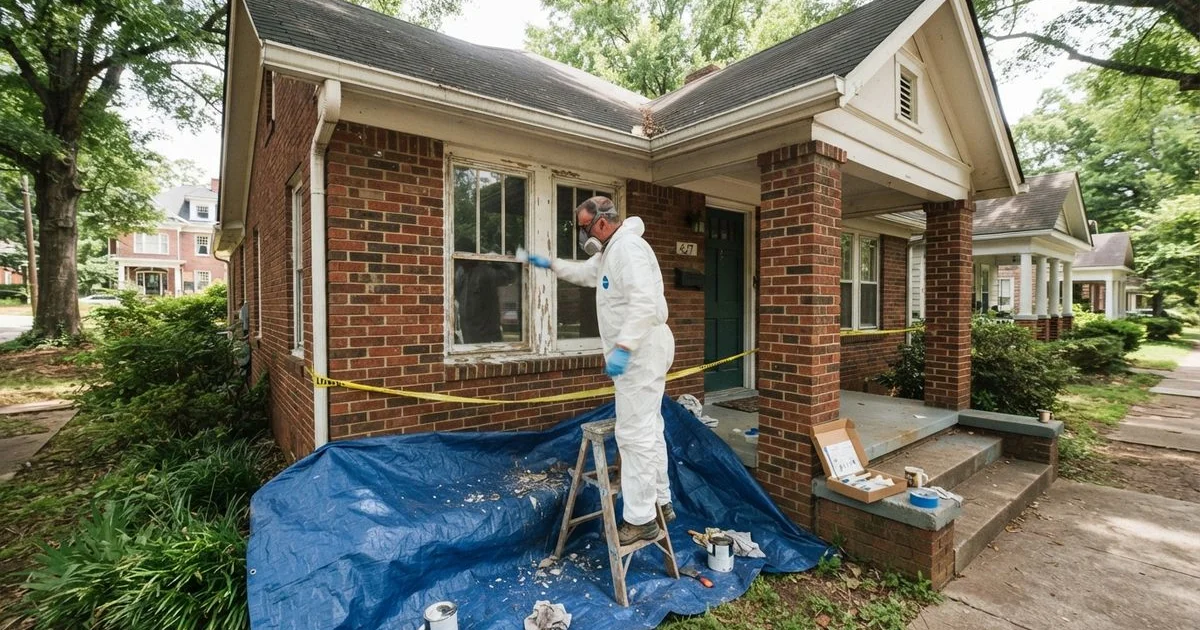
Even with a certified contractor, it helps to understand what proper containment looks like so you can spot corners being cut. Work areas should be sealed off with plastic sheeting, HVAC systems covered or shut off to avoid spreading dust through the house, and cleanup done with a HEPA vacuum rather than a standard shop vacuum or broom, which can spread fine lead dust rather than remove it. Ask where debris and used sheeting will be disposed of, since it needs to be bagged and handled as contaminated waste rather than tossed in a regular trash bin.
If you have young children or a pregnant household member, it is worth having them stay elsewhere during any work that disturbs lead paint and for a short period after cleanup is complete, given how easily fine dust settles into carpets, vents, and soft furnishings.
What this means at different points in your project
| Situation | What applies |
|---|---|
| Repainting an intact surface with no sanding or scraping | Lower risk, RRP rules generally do not apply |
| Any scraping, sanding, or demolition on pre-1978 paint | Contractor must be RRP certified |
| Selling a home built before 1978 | Federal disclosure of known lead hazards is required |
| Renovating with young children or pregnant occupants in the home | Extra caution and professional testing are worth the added step |
Questions to ask before you hire
Ask whether the contractor is RRP certified and how they handle containment, plastic sheeting over work areas, HEPA vacuum cleanup, and disposal of contaminated debris. A contractor who treats this as routine, rather than an inconvenience, is the one you want handling an older home. If the same project also changes your exterior color, HOA approval rules in Fort Mill and Indian Land are a separate legal step worth checking before work starts.
For exterior work in particular, where scraping and prep are a standard part of the job, this certification question matters just as much as the estimate itself. Our methodology explains how we account for licensing and compliance signals when scoring local painters, and you can start comparing certified providers from the home page.
FAQ
- How do I know if my home has lead-based paint?
- Any home built before 1978 is presumed to have lead-based paint somewhere unless testing proves otherwise. An EPA-recognized lead test kit can check specific surfaces, or a certified inspector can test more thoroughly if you are planning renovation work that will disturb painted surfaces.
- Am I required to hire a certified contractor to repaint an older home?
- If the work will disturb more than a small area of lead-based paint on a pre-1978 home, federal rules require the contractor to be RRP certified, meaning they are trained in lead-safe containment and cleanup. Ask for proof of certification before hiring for any project involving scraping, sanding, or demolition on an older home.
- What happens if a contractor does not follow lead-safe practices?
- Beyond the health risk to your household, contractors who are not RRP certified and disturb lead paint on a covered property can face EPA penalties, and homeowners may be left with contaminated dust that requires professional cleanup. This is one area where the cheapest bid is not worth the risk if it means skipping certification.
- Do I need to disclose lead paint if I sell my home?
- Federal law requires sellers of homes built before 1978 to disclose known lead-based paint hazards to buyers and provide an EPA-approved information pamphlet, regardless of whether any recent painting work has been done.