
Keeping a rental or commercial property painted between tenants
By Farah Whitfield · Updated 2026-07-16
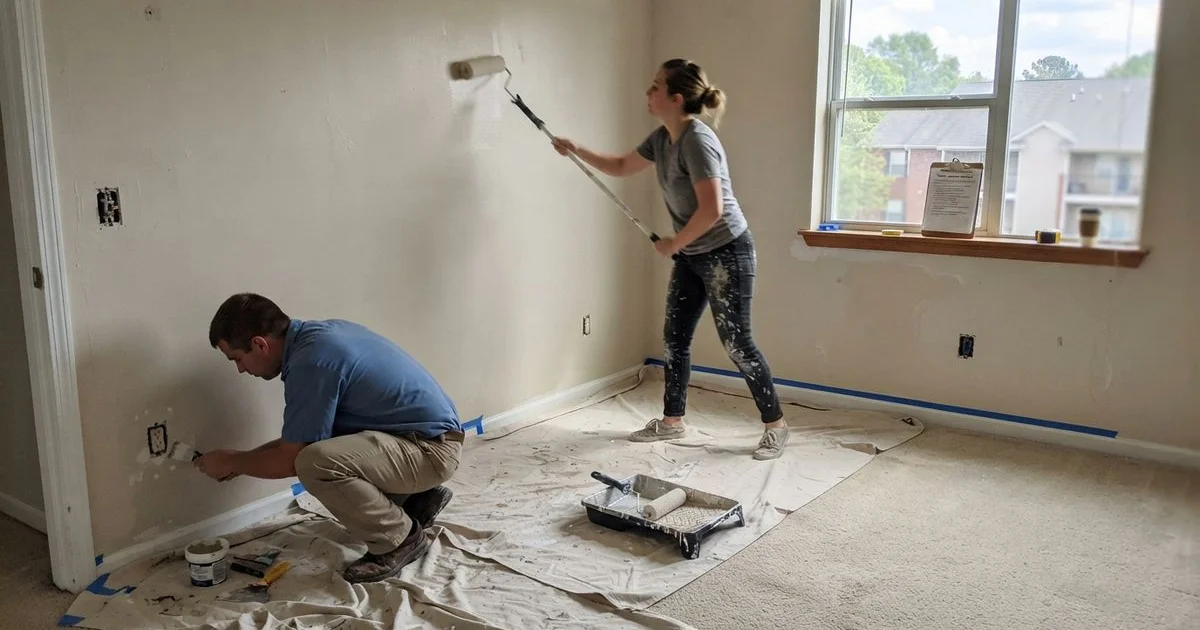
Keeping a rental or commercial space in good shape between tenants is a balance between cost, speed, and how much wear each unit actually shows. A repaint on every turnover adds up fast across multiple units, but skipping it too often leaves a property looking tired to prospective tenants.
Deciding which units actually need a repaint
Not every turnover requires a full repaint. A unit that was painted a neutral, durable color and shows only light wear may just need touch-ups: filling nail holes, spot-treating scuffs, and a quick check of trim and baseboards. Reserve full repaints for units with real damage, heavy wear, or a color choice that will not suit the next tenant, since that is where a repaint changes the leasing experience the most.
Building speed into the process
Turnover timelines are usually tighter than a typical homeowner repaint, since every day a unit sits empty is lost rent. A crew that regularly handles turnover work for landlords and property managers tends to move faster than one used to standard residential timelines, both because they know the drill and because they are not waiting on color decisions from an occupant. Confirm upfront how quickly a painter can turn around a single unit, and whether they can work around a tight move-out to move-in window.
Standardizing paint across units
Using the same durable, neutral paint line across every unit in a property simplifies both the ongoing maintenance and the turnover process itself. Crews do not need to re-mix or special-order color for each unit, touch-ups blend in more easily since the base color never changes, and future turnovers move faster because the paint on file is already known. This approach also tends to hold up better to repeated light touch-ups over several tenant cycles compared to switching colors or grades unit by unit.
Documenting condition at move-in and move-out
A quick set of photos at move-in and move-out, focused on wall condition in each room, gives both the landlord and the crew a clear baseline for what changed during the tenancy. This helps separate genuine repaint needs from cosmetic touch-ups, and it also supports any security deposit deductions if a tenant caused damage beyond normal wear. Some property managers build this documentation step directly into their move-out checklist so it happens automatically rather than depending on memory. Tenants have their own side of this: our guide to what renters can paint without breaking a lease covers what they are allowed to change on their own.
Coordinating with other turnover work
Painting rarely happens in isolation during a turnover. Carpet cleaning, minor repairs, and a general cleaning pass often need to happen around the same window, and sequencing matters. Painting before carpet cleaning avoids drips on new flooring, and scheduling any drywall or trim repair before the painter arrives means the crew is not waiting on someone else’s work mid-job. A property manager who coordinates this sequence in advance, rather than calling each vendor as the previous one finishes, generally gets a faster overall turnaround.
What drives the cost of turnover painting
| Factor | Impact on cost and timeline |
|---|---|
| Extent of wall damage from prior tenant | More patching and repair time needed |
| Whether paint color is changing | New color requires full coverage, not just touch-ups |
| Number of units done at once | Bundling units can reduce per-unit cost |
| How much notice the painter gets | Rush jobs may cost more or require schedule flexibility |
Building a repaint schedule instead of reacting each time
Rather than deciding unit by unit as move-outs happen, some landlords set a baseline: repaint every unit fully every few tenant cycles regardless of visible wear, with touch-ups in between. This spreads the cost more predictably and avoids the scramble of finding a crew on short notice every single turnover.
Working with a commercial painting crew that understands turnover work
Ask directly whether a painter has experience with rental or commercial turnover specifically, since the priorities differ from a standard homeowner job: speed, consistency across units, and working around a tight vacancy window matter more than a highly custom finish. A crew that treats turnover work as routine, rather than squeezing it in between larger jobs, is usually the more reliable choice for ongoing property management.
Our methodology explains how we weigh responsiveness and turnaround time when scoring local painters. You can start comparing commercial-capable painters from the home page to build a reliable turnover process for your property.
FAQ
- How fast can a turnover repaint realistically happen?
- A single unit with minor wear and no major repairs can often be repainted in a day or two if a crew is available on short notice. Multi-room properties or units needing patching and repair take longer, so building a buffer into your turnover timeline avoids rushing the job.
- Should every unit get repainted between every tenant?
- Not necessarily. A unit in good condition with neutral, well-maintained paint may only need touch-ups rather than a full repaint. Reserve full repaints for units with real wear, damage, or a color that needs to be neutralized for the next tenant.
- What is the most cost-effective approach across multiple units?
- Using a consistent, durable, neutral paint line across all units simplifies touch-ups and lets a crew move faster since they are not re-mixing custom colors for every turnover. It also makes future patch jobs blend in more easily.
- How do I find a painter who can work on short notice?
- Ask directly about typical turnaround time for a single-unit repaint and whether they can accommodate rush requests between scheduled jobs. A painter who does regular turnover work for other landlords or property managers usually has a faster, more predictable process than one used to standard homeowner timelines.