
Cabinet refinishing vs. replacing your cabinets: which is worth it
By Farah Whitfield · Updated 2026-07-04
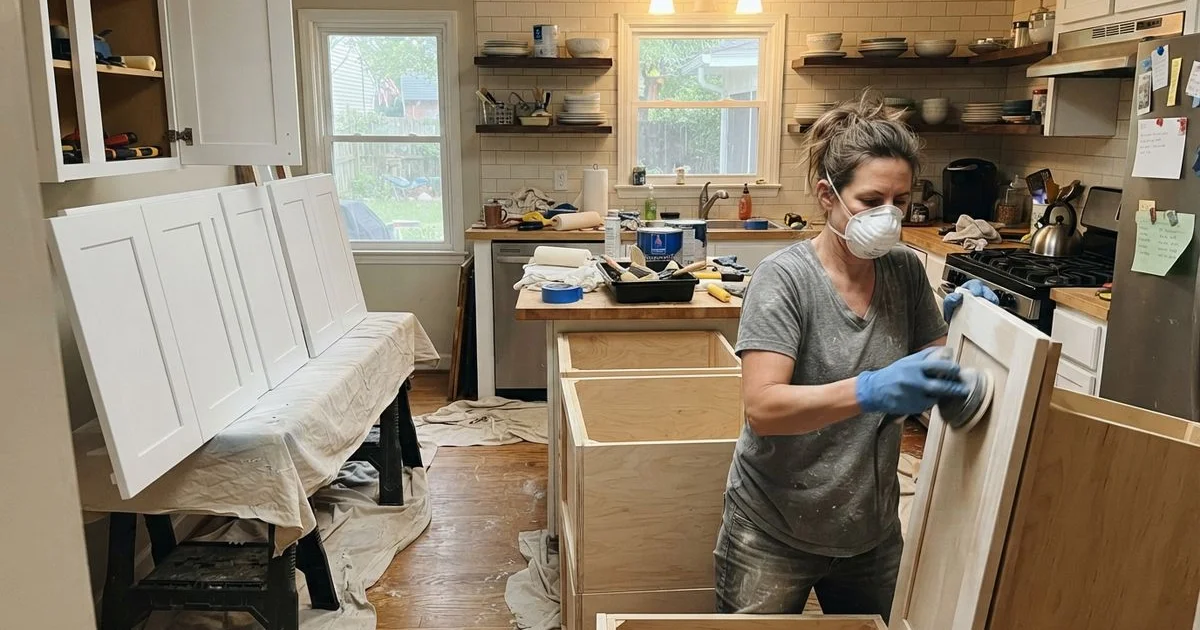
A dated kitchen does not always mean the cabinets need to go. Refinishing and full replacement solve the same visual problem in very different ways, and the right call depends more on the condition of what you already have than on how tired the current look feels.
What refinishing actually involves
Cabinet refinishing means reworking the surfaces you already own rather than tearing them out. Doors and drawer fronts typically come off, get degreased and sanded, and either get sprayed off-site in a controlled setting for a smoother factory-like finish or painted in place. Boxes and face frames get the same prep and a fresh coat. When the underlying structure is sound, this approach delivers a dramatically different look at a fraction of what new cabinetry costs.
Why the boxes matter more than the look
The deciding factor is not how much you dislike the current color. It is whether the cabinet boxes and doors are structurally solid. Particleboard boxes that have swelled or delaminated from moisture near a sink or dishwasher are poor refinishing candidates, since no amount of paint fixes swollen material underneath. Solid wood or plywood boxes that are still square, with doors and drawers that operate smoothly, are exactly the kind of cabinets refinishing was built for.
If you are unsure, open every door and drawer and check for warping, soft spots, or gaps where the frame has shifted. Cabinets that still function well mechanically are almost always better candidates for a fresh finish than for full replacement.
When replacement is the better call
Full replacement makes more sense when you want to change the kitchen’s layout, not just its finish. Moving where the sink or range sits, adding an island, or reconfiguring storage requires new boxes regardless of how good the old ones look. Replacement is also the right call when the existing cabinets have real structural damage: swollen particleboard, cracked frames, or doors that no longer align no matter how they are adjusted.
A middle option: refacing
Between a full refinish and full replacement sits refacing, which keeps the boxes in place but replaces the door and drawer fronts with new ones, sometimes paired with a new veneer on any exposed box sides. It costs more than refinishing since new materials are involved, and less than full replacement since the boxes and their installation stay untouched. Refacing is worth asking about if you like your current layout and box quality but want a more dramatic style change than a color update alone provides, such as switching from a raised panel door to a flat modern one.
Comparing the two paths
| Factor | Refinishing | Full replacement |
|---|---|---|
| Typical cost | Lower, priced by door and drawer count | Higher, priced by new boxes, doors, and installation |
| Timeline | Days to about two weeks depending on scope | Often several weeks including custom ordering |
| Best for | Solid boxes with a dated or worn finish | Damaged boxes or a layout change |
| Disruption | Kitchen partially usable during the job | Kitchen fully out of commission longer |
What changes the price either way
For refinishing, the number of doors and drawers, whether they are sprayed off-site or finished in place, and whether you choose a simple sprayed finish or a glazed, two-tone look all move the price. For replacement, box material, door style, and whether you keep the existing footprint or reconfigure the layout drive the cost far more than finish color does.
Getting a fair read on your specific kitchen
A refinishing provider can usually tell within a short walkthrough whether your boxes are solid candidates or whether the moisture damage runs deeper than the finish. Ask directly about box condition, not just the finish you want, since that assessment is what actually determines whether refinishing will hold up for years or need to be redone sooner than expected.
Our methodology explains how we weigh finish quality and consistency when scoring cabinet refinishing providers in the area. You can start comparing options from the home page once you have a sense of which path fits your kitchen.
FAQ
- Is cabinet refinishing always cheaper than replacement?
- Almost always, since refinishing prices out labor and finish materials on cabinet boxes you already own, rather than new boxes, doors, and hardware. Full replacement only becomes the more sensible option when the boxes themselves are damaged or you want a different layout.
- How do I know if my cabinets are good candidates for refinishing?
- Solid wood or plywood boxes that are still square, with doors that close properly and no water damage or warping, are strong candidates. Particleboard boxes that have swelled from moisture, or cabinets with structural damage, are better candidates for replacement.
- Can refinishing change the whole look of a kitchen?
- Yes. A color change, especially from a dated wood tone to a modern painted finish, can transform a kitchen's look dramatically without touching the layout. Hardware changes and glass panel inserts add to that effect for relatively little additional cost.
- How long does a refinished cabinet finish typically last?
- A quality refinishing job with proper prep and a durable topcoat generally holds up for eight to fifteen years under normal use, with wear showing first around handles and near the sink.